
Many agency operators waste thousands of dollars paying vendors for dead URLs. You need a strategy for high da profile backlinks that actually drives measurable authority. They hope to trick the search engine algorithm, which usually fails. Forget the outdated bulk submission tactics from ten years ago. Stop treating profile registrations as link dumps; optimize each bio as an active landing page. We are breaking down the operational realities of how search bots evaluate these digital assets in a heavily filtered web environment. It is time to stop guessing. You have to start building digital assets that index, stick, and pass real topic relevance. The industry relies heavily on automation. However, manual intervention is the only way to bypass modern spam filters. Let’s explore exactly what works right now.
Defining High Authority Link Strategies
From a strictly financial perspective, link acquisition costs vary wildly—ranging from $50 on freelance boards up to $1,500 via boutique agencies. Yet, relying on raw volume creates massive operational bottlenecks for small teams.
Raw link volume destroys crawl budgets; manual indexation drives actual topical authority.
If you run a local campaign, massive volume actually hurts you.
What is the true value of these links?
Everyone wants the shortcut, but what actually moves your domain rating in competitive niches? We often see marketers hunting for a best profile list without understanding how crawl budgets actually function. A solitary page on an authority site means absolutely nothing if Google never finds it. To capture true value, you have to build high da profile backlinks that sit on frequently crawled, deeply interconnected domains. According to Sistrix (2024), sites that previously relied heavily on scaled, unhelpful content faced staggering declines in US search results during recent core algorithm updates. That is exactly why simply signing up isn’t enough.
The RAG and Vector Embedding Reality
Let’s step away from standard metric tracking for a moment and look at how modern AI-driven search models actually extract data. Ask your technical team:
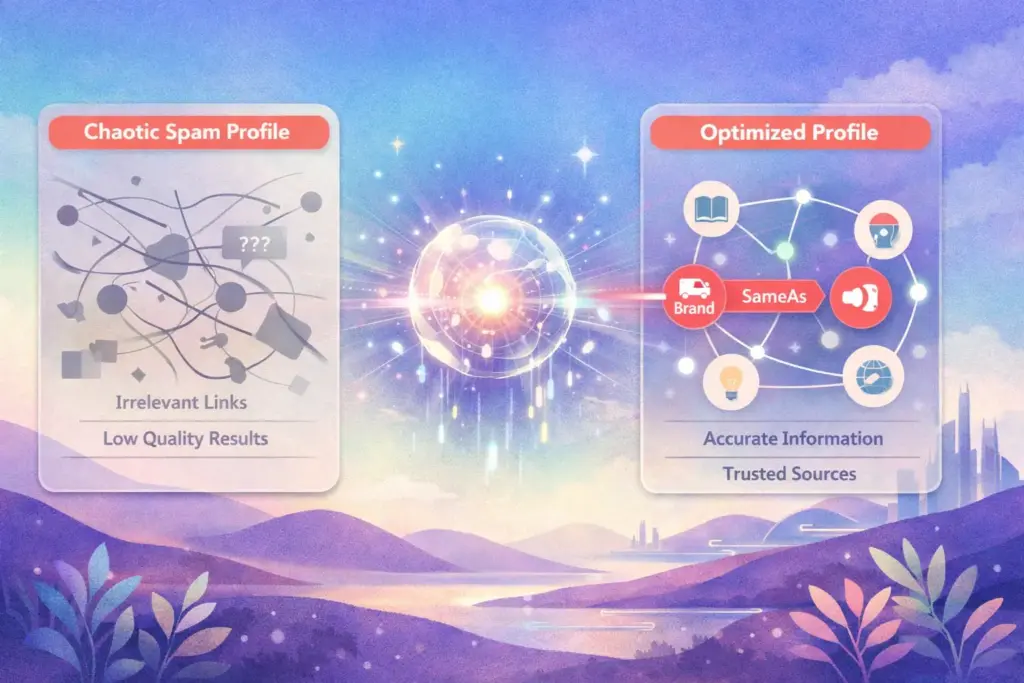
- Are your external bio pages structured clearly enough to serve as baseline truths for a Knowledge Graph, or are they just a chaotic mess of spun text?
- When a generative engine crawls your external footprint, does it measure high semantic proximity between your brand and the target niche?
- Are you actively building connections that prove your localized authority, or are you just chasing raw numbers on entirely irrelevant foreign directories?
Generic spun bios confuse generative engines; structured SameAs markup builds verifiable Knowledge Graph anchors.
The technical bridge here involves utilizing schema.org/SameAs markup on your primary domain. Pointing this structured data directly to your newly created dofollow profile backlinks locks the verifiable entity narrative in place across the entire web. Industry experts constantly emphasize that every link must be carefully vetted and cultivated to provide the best value not just for your own site, but also the site that’s giving you the backlink.
You’ll notice that the strongest dofollow profile backlinks belong to users who actively participate in the platform’s ecosystem.
- Active Commenting: Leaving thoughtful replies on industry threads increases the chance that internal crawlers will follow your username.
- Community Upvotes: Participating in voting systems builds account trust on targeted networks.
- Profile Interlinking: Linking your new bio to your existing active social media accounts creates a verifiable entity graph.
- Media Uploads: Accounts with custom avatars and header images survive algorithmic sweeps significantly longer than blank accounts.
Unoptimized orphan registrations hold negative ROI; active community participation forces search bot indexation.
How do they differ from standard mentions?
Comparing standard PR mentions to user-generated accounts reveals a stark difference in editorial control. A mention on a news site is editorially blocked. You can’t log in and change the target URL later. You have to beg a journalist for a correction (yes, really).
Here is a quick breakdown of how these specific assets behave structurally in your marketing campaign.
| Metric | User Accounts | Editorial Mentions |
| Link Control | 100% user-editable | 0% (strictly controlled by editor) |
| Indexing Speed | 2 to 6 weeks on average | Usually live and indexed within 48 hours |
| Anchor Text | Often limited to branded or naked URLs | Highly contextual to the article topic |
| Risk Profile | Vulnerable to automatic account deletion | Permanent unless the hosting site shuts down |
You have absolute control over the target destination with user accounts, though they often require active secondary pushing to index properly. If you rely strictly on free profile links, you are explicitly sacrificing speed for total control. The trade-off is completely worth it for tier-two strategies, but you have to manage your expectations regarding immediate rank adjustments.
Best Platforms for Dofollow Link Building
Choosing the right domains directly impacts your agency operating margins. Focusing your team hours on toxic domains inflates labor costs by roughly thirty percent per campaign. You need a vetted database cross-checked with Trust Flow and URL Rating to ensure every hour spent yields a quantifiable lift.
Which free lists offer the strongest value?
Finding a working best profile list usually leads you down a massive rabbit hole of outdated, spam-filled forums from the early 2000s. Instead of spraying your target URL across 500 dead sites, stick to developer networks, design portfolios, and audio platforms that actually maintain strict moderation standards.
- Developer Repositories: Sites like GitHub and GitLab offer prime dofollow profile backlinks if you actually commit code or write a real readme file.
- Creative Portfolios: Behance and Dribbble let you build stunning visual bios with linked image galleries. These serve as top-tier free profile links for digital agencies.
- Audio Sharing Platforms: SoundCloud and Mixcloud allow website inclusions in the main bio sections if you upload original audio.
- Startup Directories: Crunchbase and AngelList require strict corporate verification but provide incredible trust signals.
Don’t just grab a random best profile list from a black-hat forum and hand it to a virtual assistant. Verify the platform’s organic traffic before assigning it to your team.
Safe Extraction and Multi-Accounting
If you plan to scale this process, you cannot operate from a single local IP address.
Mass profile syndication triggers algorithmic shadowbans; premium residential proxies ensure safe multi-accounting operations.
Securing multiple free profile links concurrently for different clients demands this level of infrastructure security. Your setup must include specialized anti-detect browsers to mimic genuine human hardware fingerprints.
How to safely utilize edu domain profiles?
University sites are the holy grail for many search professionals. Getting edu profile backlinks feels like a massive win for client reporting. But moderation on these academic servers is incredibly strict. If your project is a localized plumbing business, dropping your URL onto an MIT student forum looks highly manipulative and out of place.
Aggressive commercial anchors burn educational profiles; academic value integration secures permanent university backlinks.
To ensure your edu profile backlinks stick permanently, you must provide genuine community value. Fill out the thesis section with related industry research. Mention relevant campus courses or alumni events. The real trick to securing high da profile backlinks on academic platforms is matching the strict context of the university environment. A generic, copy-pasted bio will trigger an admin ban almost immediately, burning the account forever. We strictly mandate manual creation across our agency for this exact reason.
Easy Steps for Fast Profile Optimization
Unoptimized pages are essentially dead server space draining your resources. An agency spending twenty hours a week on account creation but zero on contextual optimization is literally burning cash. You have to allocate at least thirty percent of your link-building budget to secondary indexing strategies to see any measurable impact on your traffic value.
How to write an SEO-friendly bio text?
Don’t just copy and paste the same fifty-word description across the entire web. If you want those free profile links to actually matter, treat the bio like a standalone guest post. The current shift in search strategy requires moving from quantity to quality, prioritizing highly refined pages over scaled AI content.
- Draft Unique Copy: Write at least 200 to 300 words explaining your specific role, company mission, or technical background.
- Embed Semantic Context: Drop in industry terms naturally throughout the paragraphs, actively avoiding any exact-match phrase stuffing.
- Link to Socials: Interlink your existing verified pages to create an interconnected entity cluster.
- Add Rich Media: Upload a high-resolution headshot and a custom banner image to bypass the most basic automated spam filters.
- Inject the Target Address: Place your primary website strictly in the designated website field rather than forcing it artificially into the text body.
“Once you’ve been hit by Google, it’s hard to describe just how much work and time are required to get back into a good place. And throwing more AI content, more spam, more cheats and hacks and shortcuts at the problem will only make it worse.” – Lily Ray, VP of SEO Strategy & Research at Amsive Digital.
When you build high da profile backlinks, the surrounding text provides the URL with its topical relevance. Generating edu profile backlinks requires even more formal, academic phrasing. You wouldn’t use internet slang on a university research board, would you? We constantly tell our junior team members that any best profile list is completely useless if the accompanying bios read like cheap spam.
Where should you place the exact URL?
Most high-quality platforms give you a specific, hard-coded field for your website. Use it correctly. Do not try to sneak your dofollow profile backlinks into the body text if it explicitly violates the platform terms of service.
Before you finalize your account setup, watch this breakdown of exactly how to generate these connections securely.
- Dedicated URL Fields: This is the absolute safest spot for link insertion, as it wraps the link in platform-approved HTML tags.
- Within the Bio Body: Some specialized forums still allow raw HTML coding for custom layouts.
- Project Attachments: Certain creative sites let you link out from specific uploaded design projects.
- Forum Signatures: Keep this to one link maximum to avoid looking like an aggressive spammer.
Always check the source code to see if the platform turns free profile links into internal redirect chains. A redirect chain heavily dilutes the PageRank you worked so hard to acquire.
Common Link Creation Mistakes to Avoid
Automation in this specific acquisition channel introduces massive, easily detectable footprint risks. When footprints are detected, entire client portfolios can face severe algorithmic suppression. We have calculated that recovering from a manual penalty costs businesses roughly ten thousand dollars in lost revenue. Do it manually, or skip it entirely.
Why skip automated submission software?
Automated submission software triggers SpamBrain penalties; manual entity architecture secures long-term rankings.
Blasting your client site with automated software tools is a dangerous relic of 2010. If you try to build high da profile backlinks using legacy software like GSA Search Engine Ranker, Xrumer, or RankerX, you will eventually get caught. These scripts leave massive HTML footprints, ignore custom fields, and register from known datacenter IPs. According to Authority Builders (2024), the Google SpamBrain system neutralizes the value of low-quality links instead of penalizing the site, making spammy automation completely ineffective.
You might honestly think you found a perfect best profile list available online, but if a script registers the account, the internal anti-spam mechanisms will shadowban the URL immediately. Manual data entry ensures you fill out the obscure, optional fields that bots always skip. When dealing with strict edu profile backlinks, this hands-on setup is absolutely critical. Even for basic free profile links, human interaction provides a layer of behavioral validation that tools cannot replicate.
How does anchor text stuffing hurt SEO?
Nobody naturally links to a personal bio with the exact anchor text “buy cheap plumbing supplies online”. That behavior is a massive red flag for crawlers.
- Branded Anchors: Use your actual company name. This is universally safe and highly effective for building core entity trust.
- Naked URLs: Just placing your raw domain looks completely natural on dofollow profile backlinks.
- Generic Phrases: “Click here to read more” or “Visit our official website” are perfectly fine in this casual context.
- Author Names: Using a specific persona name builds author trust and keeps the dofollow profile backlinks secure from manual reviews.
Over-optimizing your anchors on edu profile backlinks will immediately trigger manual reviews from college administrators. You want your digital footprint to age gracefully without raising alarms. It is much better to have unoptimized high da profile backlinks that actually pass domain trust than heavily optimized ones that get your entire site penalized. We have seen too many promising niche sites crash overnight because they abused their newly acquired best profile list with aggressive commercial anchors.
Handing off profile creation to a junior team or an offshore vendor without a strict operational framework is a recipe for algorithmic disaster. You cannot scale manual link building on trust alone; you need a bulletproof Standard Operating Procedure (SOP). To ensure your team doesn’t burn client budgets on toxic, automated spam, we’ve open-sourced our internal vetting process. Use this exact Quality Assurance checklist to audit every single profile link before it ever reaches a client report.

Essential Resources and Common FAQ
Managing client expectations around indexing timelines is absolutely crucial for long-term retention. Agencies lose lucrative contracts because they fail to explain that authority building is inherently a delayed-gratification strategy. Setting up proper tracking dashboards protects your recurring revenue and perfectly justifies the operational cost of manual execution.
How long until search engines index them?
You just finished securing several high da profile backlinks, but they aren’t showing up in your tracking software. Don’t panic just yet. Search engines prioritize crawling web pages with high internal traffic and user engagement. An orphan page on a massive tech forum might take anywhere from 3 to 12 weeks to get indexed natively.
Pinging raw URLs fails modern indexing; tier-two web properties catalyze natural discovery crawls.
Just focus on creating solid edu profile backlinks, fill out the biographies thoroughly, and let the platforms carry the weight over time. The ultimate best profile list won’t matter if you lack the patience to let the discovery crawls do their job naturally.
What metrics define a truly safe source?
Chasing static domain metrics wastes budget; acquiring interconnected community links generates measurable ROI. A domain could easily have a high score but be completely infested with foreign pharmaceutical spam in the user directories.
You need to deeply analyze the organic traffic of the exact subfolder where your dofollow profile backlinks will live. Cross-reference this with Trust Flow and Ahrefs URL Rating. Are actual humans visiting this specific section of the site? If the subfolder spam score is above 10%, walk away immediately. Your new high da profile backlinks are only inherently valuable if the surrounding digital neighborhood is totally clean. We highly recommend prioritizing upward traffic trends over static historical metrics when hunting for new free profile links. If the host site traffic is rapidly tanking, your link value will inevitably tank right alongside it. You have to maintain incredibly high standards, especially when aggressively targeting edu profile backlinks for localized businesses.
FAQ
How do you find niche-relevant platforms for link building?
Finding hyper-relevant sources requires advanced search operators and professional data extraction software. Tools like ScrapeBox or Screaming Frog’s custom extraction feature allow you to scrape highly targeted directories safely. Relying on a generic best profile list usually yields heavily spammed targets.
Are nofollow links completely useless for SEO campaigns?
No, they serve a vital purpose in establishing a natural-looking, balanced link graph. Strictly dofollow link ratios trigger algorithmic filters; nofollow attributes drive vital referral traffic. Acquiring free profile links with nofollow tags indirectly supports vital behavioral signals and your overall brand awareness.
Do social media bios count as high authority links?
Yes, but their value is generally restricted to entity establishment and knowledge panel generation. Most large networks enforce strict UGC tags on all user-submitted URLs. While they validate your corporate identity, relying solely on them won’t replace the need for dedicated high da profile backlinks.
Is it safe to use tiered link building on user pages?
Yes, provided you filter your tier-two targets through incredibly strict outbound spam metrics. Pointing thousands of low-quality comments at your dofollow profile backlinks will get those pages permanently deleted by human moderators. Keep your secondary links highly contextually relevant and relatively low-velocity.
Can you outsource this entire process to offshore teams?
No, unless you build a foolproof standard operating procedure that strictly dictates every single manual step. Offshore teams often default to using automated tools to save time, effectively destroying your domain credibility. Sourcing a cheap best profile list and handing it off without weekly audits is a massive operational risk.
Building sustainable search visibility requires a highly dedicated approach to high da profile backlinks to actually move the needle without triggering spam filters. Keep your optimization entirely manual, respect platform community guidelines, and focus relentlessly on internal indexability. Are you ready to audit your existing link portfolio and prune the dead weight today?